 Development
WordPress speed: the 12 fixes that take a site from 40 to 95 on Lighthouse
A slow WordPress site is almost always fixable. These are the 12 fixes we apply, in order, to take a typical business site from…
· 8 min read
Development
Typical UK app costs, three fully worked budgets at real hourly rates, the running costs most quotes leave out, and when a web app does the job for less.
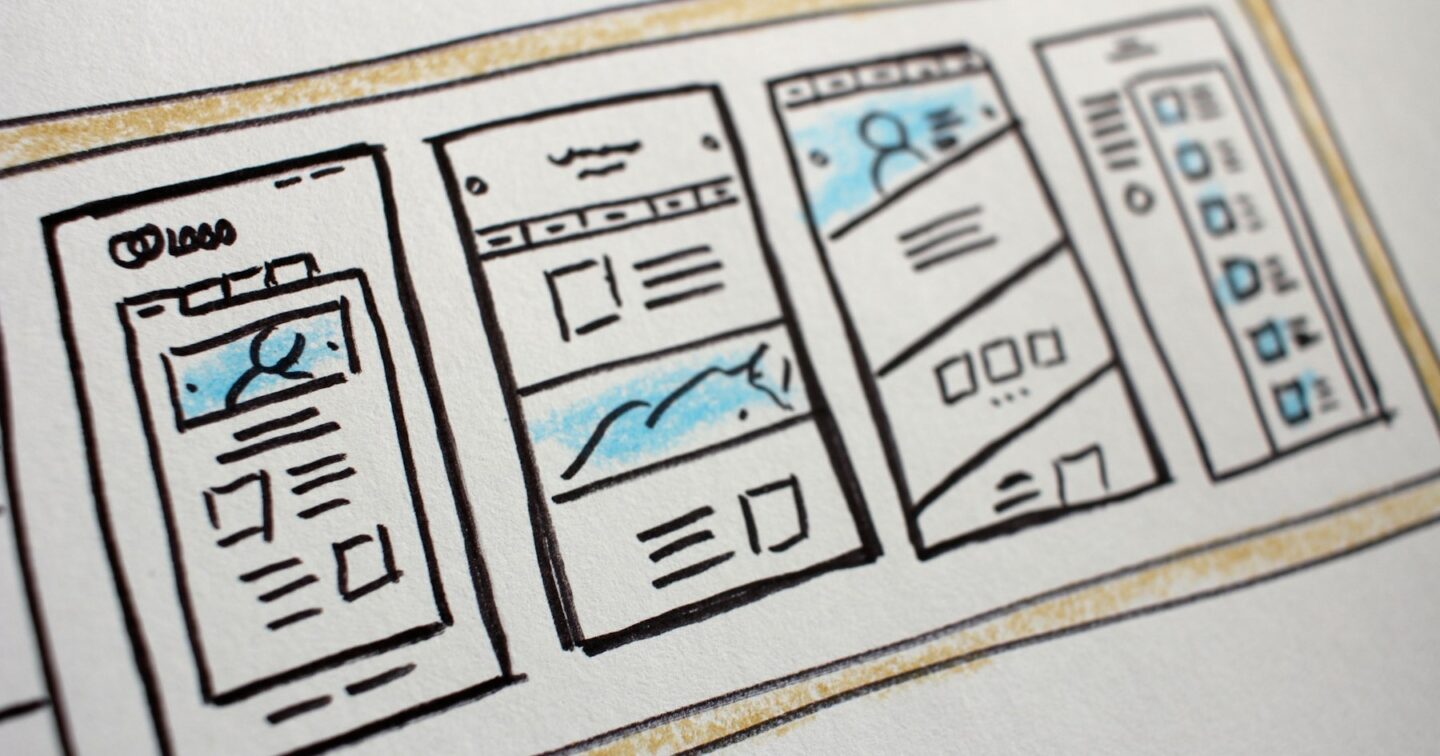
A business app built by a UK agency typically costs £10,000 to £30,000 for a simple app, £30,000 to £80,000 for a mid-sized app with accounts, payments and a custom back end, and £80,000 or more for a complex platform. A clickable prototype or small proof of concept can cost £2,000 to £10,000. The price is driven by the number of features, whether you need a custom back end and admin panel, and whether iPhone and Android are built separately or from one codebase. We build iOS and Android apps in Flutter at £70 an hour + VAT, so a 100-hour first version costs £5,250 + VAT after our volume discount, and a typical booking app with its back end comes to about £15,000 + VAT. The worked budgets below show where every pound goes.
These are typical ranges for UK agencies in 2026, based on what we see in the market and in competing quotes our clients show us. They are ranges, not a survey: offshore teams and solo freelancers may be cheaper, large London studios considerably more.
| Type of app | What it usually includes | Typical UK range (excl. VAT) | Typical timescale |
|---|---|---|---|
| Prototype or proof of concept | Clickable design or a small working app to test an idea with real users | £2,000 to £10,000 | 3 to 6 weeks |
| Simple app | A handful of screens, log-in, content from an existing website or system | £10,000 to £30,000 | 2 to 3 months |
| Mid-sized business app | Accounts, bookings or orders, payments, notifications, admin panel, custom back end | £30,000 to £80,000 | 3 to 6 months |
| Complex platform | Marketplace, real-time features, several user types, integrations | £80,000 to £250,000+ | 6 months and up |
If those figures feel high, remember that an app is rarely just the thing on the phone. It usually needs a back end (the server or cloud service that stores data and talks to the app), an admin panel so your team can manage users and content, and connections to payment providers or your existing software. On many projects the parts the customer never sees take a third or more of the budget.
Each feature means design, development and testing, on two platforms. Log-in, profiles, bookings, payments, maps, chat, push notifications, offline mode: each adds days. Chat and real-time tracking are the classic budget-busters, because they look simple on a wireframe and are not.
The single most effective way to control cost is to launch with the smallest set of features that is genuinely useful, then add the rest once real users show you what they want. We have seen far more apps fail from building too much before launch than from launching too little.
Separate native apps (Swift for iPhone, Kotlin for Android) mean two codebases and, broadly, close to double the build and maintenance. Cross-platform frameworks such as Flutter use one codebase for both. We use Flutter for most business apps because performance is close to native, the interface is consistent on both platforms and every future change is made once. Native still makes sense for apps that depend heavily on specialised device hardware, advanced background processing or the very latest platform features on release day.
Simple apps can run on Firebase, which handles log-in, databases, file storage and notifications without a custom server. That is cheaper to build and fine for many apps. Apps with complex business rules, integrations or reporting usually need a custom back end, often a Laravel or Node API with an admin panel. Our API development and integration work covers this side.
Good UI/UX design happens before code. Decisions made on screen in a prototype cost hours; the same decisions made in code cost days. Skimping here is a false saving.
Connecting to Stripe, a CRM, Xero or another accounting package, a booking platform or a piece of hardware adds work. The cost depends heavily on the quality of the other system’s API. A well-documented modern API might take a day; an old system with no documentation can take weeks.
Apps must be tested on a spread of real devices and screen sizes, and both Apple and Google review submissions. Apple in particular may send an app back for changes, and new Google Play developer accounts face a closed-testing period before they can publish to the public. Build two to three weeks for this into any launch plan. Our pre-launch testing checklist shows what we check.
We price app work by the hour. Our Mobile Application rate is £70/h, UI/UX Design £55/h and Custom Web Development (back ends and admin panels) £60/h, all excluding VAT. Hours never expire and get cheaper in bulk: 5 % off 10 hours, 10 % off 15, 15 % off 20, 20 % off 50 and 25 % off 100. Hours are estimates until scope is agreed.
A founder in Manchester wants to test a dog-walking marketplace with 30 local users before raising money. Scope: sign-up, walker profiles, a request form and simple messaging, on Firebase.
| Work | Hours | Calculation | Cost (excl. VAT) |
|---|---|---|---|
| UI/UX design | 15 | £825 less 10 % | £742.50 |
| Flutter app on Firebase | 50 | £3,500 less 20 % | £2,800.00 |
| Total | £3,542.50 + £708.50 VAT | £4,251 incl. VAT |
A gym in Glasgow wants members to see the class timetable, news and offers, pulled from its existing WordPress site, with push notifications.
| Work | Hours | Calculation | Cost (excl. VAT) |
|---|---|---|---|
| UI/UX design | 20 | £1,100 less 15 % | £935 |
| Flutter app | 100 | £7,000 less 25 % | £5,250 |
| WordPress API endpoints | 20 | £1,200 less 15 % | £1,020 |
| Total | £7,205 + £1,441 VAT | £8,646 incl. VAT |
A chain of beauty salons across Bristol and Bath wants customers to book, pay a deposit through Stripe, get reminders and manage appointments. Staff need an admin panel for diaries and reports.
| Work | Hours | Calculation | Cost (excl. VAT) |
|---|---|---|---|
| Discovery and UI/UX design | 40 | £2,200 less 15 % | £1,870 |
| Flutter app (iOS and Android) | 160 | £11,200 less 25 % | £8,400 |
| Back end API and admin panel | 80 | £4,800 less 20 % | £3,840 |
| Testing, store submission, launch | 20 | £1,400 less 15 % | £1,190 |
| Total | 300 | £15,300 + £3,060 VAT | £18,360 incl. VAT |
All three sit at or below the lower end of the UK ranges above. That is mostly down to Flutter’s single codebase and to our overheads: we are a small team with an office in St Albans, not a large central London studio. If your idea needs more hours than you hoped, we will say so before you spend anything. You can buy hours on our hire us page, paying in full or with a 50 % deposit.
An app is never really finished. The costs most first-time quotes leave out:
A sensible rule of thumb is to budget 15 to 20 % of the build cost a year for maintenance and small improvements. For the salon booking app above, that is roughly £2,300 to £3,000 + VAT a year.
Before committing to an app, ask whether a fast mobile website or a progressive web app (PWA) would do the job. A PWA runs in the browser, can be added to the home screen, works offline and can send notifications on most devices, with no store approval or commission.
| Need | Mobile website or PWA | Native or Flutter app |
|---|---|---|
| Information, services, contact | Ideal | Overkill |
| Online booking and deposits | Works well | Better if customers book often |
| Push notifications | Supported on most devices | Fully supported |
| Camera, GPS, Bluetooth, background tasks | Limited | Full access |
| Presence in the App Store and Google Play | No | Yes |
| Build cost | Lower | Higher |
| Updates | Instant, no review | Through store review |
An app earns its keep when customers use it repeatedly (weekly or more), when it needs device features like the camera, location or background tracking, or when the app is the product. For many service businesses, a fast website with online booking delivers most of the value for a fraction of the cost. See our progressive web app development page and how much a website costs in the UK for comparison.
Our mobile work includes Washy, an on-demand car-wash app, and the Flutter app for Tattoo-Art & Obsession, built alongside the studio’s WordPress website. We also built KDMasterKey, web-based keyword-analysis software with a companion app for self-publishers. Each started with a deliberately small first version. You can see more on our clients page.
Any agency can only quote accurately against a clear scope. Before you ask, prepare:
Send that to two or three agencies and compare the hours, not just the totals. A quote with no breakdown is hard to hold anyone to. If you want us to price it, get in touch or read more about our mobile app development service. We work with businesses across the UK and are happy to meet in London or St Albans.
Typically £10,000 to £30,000 at a UK agency. At our rates a simple Flutter app built on an existing system can be under £10,000 including VAT, as our gym timetable example shows (£8,646 including VAT). A prototype to test an idea can be around £4,000 to £5,000.
A prototype takes about three to six weeks, a simple app two to three months and a mid-sized app with payments and an admin panel three to six months. Allow two to three weeks for testing and app store review.
Usually yes. A cross-platform framework such as Flutter uses one codebase for both, which avoids most of the duplicated work of building two native apps and makes future updates cheaper.
Apple's developer programme (US$99 a year), Google Play's one-off US$25 fee, hosting or cloud services, annual updates for new iOS and Android versions, and fixes and improvements. Budget roughly 15 to 20 % of the build cost a year.
If customers use your service occasionally and you do not need device features such as background location or Bluetooth, a progressive web app or a fast mobile website is often enough, at lower cost and without store fees.
Mobile app development is £70 an hour + VAT, UI/UX design £55 and back-end development £60, with discounts of 5 % at 10 hours up to 25 % at 100 hours. Hours never expire and you can pay in full or with a 50 % deposit.
Photo: Hal Gatewood via Unsplash
Development
A slow WordPress site is almost always fixable. These are the 12 fixes we apply, in order, to take a typical business site from…
· 8 min read
 Development
The frameworks we build UK business websites and apps with in 2026, when each one is the right call, and how the choice changes…
· 8 min read
 Development
Most UK SaaS MVPs cost £7,000–£20,000 ex VAT and take 10–16 weeks. Here's what that buys, what to leave out, and a worked example…
· 9 min read
A developer replies within one working day. Fixed price or hourly, your choice — and the code is yours.