 Development
How much does an app cost to build in the UK in 2026?
Typical UK app costs, three fully worked budgets at real hourly rates, the running costs most quotes leave out, and when a web app…
· 8 min read
Development
Most UK SaaS MVPs cost £7,000–£20,000 ex VAT and take 10–16 weeks. Here's what that buys, what to leave out, and a worked example at our real rates.

A SaaS MVP built properly by a UK agency usually costs between £7,000 and £20,000 ex VAT and takes 10 to 16 weeks from first workshop to paying users. At WE-DEV that buys you sign-up and login, Stripe subscriptions, one core workflow done well, an admin area and a production setup you won’t have to throw away. Anything much cheaper is usually a prototype; anything much dearer is usually a version two in disguise. The rest of this guide explains what goes into that range, what to leave out, and how to keep the first release small enough to ship.
The phrase has been stretched until it means almost nothing. Some founders use it for a clickable Figma file, others for a product with eight user roles and a mobile app. For software you plan to charge for, we use a narrow definition: the smallest product a stranger can sign up to, pay for and get real value from without you on the phone holding their hand.
That definition does two useful things. It rules out the demo that only works when you drive it, and it rules out the feature list that grew in a spreadsheet over six months. If a feature doesn’t help a new customer reach the moment where they think “this saves me time”, it waits.
That list looks short. In our experience it is about 60 % of the build effort on a typical first release, and it’s the part founders most often underestimate because none of it feels like “the product”.
UK agency day rates for this kind of work typically run from around £450 to £900 a day, and freelance rates vary even more. Our Custom Web Development rate is £60 an hour, with volume discounts on prepaid hours (10 h 5 %, 15 h 10 %, 20 h 15 %, 50 h 20 %, 100 h 25 %), and hours never expire. All figures below exclude VAT at 20 %.
| Tier | What you get | Typical effort | WE-DEV cost (ex VAT) | Timeline |
|---|---|---|---|---|
| Prototype | Clickable design or no-code mock-up for testing the idea with users | 20–40 h design | £935–£1,870 | 2–3 weeks |
| Lean MVP | Accounts, Stripe billing, one workflow, basic admin, web only | 150–200 h | £6,750–£9,000 | 8–12 weeks |
| Standard MVP | As lean, plus team workspaces, one integration, onboarding emails, reporting | 250–400 h | £11,250–£18,000 | 12–16 weeks |
| Complex MVP | Regulated data, heavy integrations, real-time features or a companion app | 450 h and up | £20,250+ | 16–24 weeks |
The prototype row uses our UI/UX Design rate of £55 an hour; the build rows use the 25 % discount that applies to blocks of 100 hours or more at £60.
Say you’re a former logistics manager in Leeds with an idea for a delivery-slot booking tool for small warehouses. After a discovery workshop the scope comes to roughly 300 hours of development plus 30 hours of interface design.
You can pay in full or put down a 50 % deposit, and because the hours don’t expire, any you don’t use stay on account for the changes that always follow the first month of real users. If you’re VAT-registered, you reclaim the £2,980.50, so the real cost to the business is the ex-VAT figure.
Building it is the larger cheque, but budget for these every month from day one:
| Item | Typical early-stage cost | Notes |
|---|---|---|
| Hosting (app server, database, storage) | £20–£150 a month | Scales with users; managed platforms cost more but save admin time |
| Transactional email | £0–£30 a month | Sign-up, receipts, password resets |
| Error monitoring and uptime checks | £0–£30 a month | Free tiers cover most MVPs |
| Stripe card fees | Around 1.5 % + 20p per UK card payment | According to Stripe’s UK pricing page; non-UK cards cost more |
| Stripe Billing | Around 0.7 % of billing volume on pay-as-you-go | Check Stripe’s current pricing before you model it |
| Support and fixes | 5–10 h a month | Real users find edge cases no test plan does |
For most MVPs that adds up to somewhere between £350 and £1,000 a month in the first year, most of it in development time for fixes and small improvements.
Sixteen weeks sounds long when you’re excited. It’s quick for software that strangers will pay for. Here is how a typical Standard MVP breaks down with us:
The phase founders try to cut is the beta. Don’t. It is the cheapest month of learning you’ll ever buy, and every product we’ve seen skip it has spent the saved time later fixing problems in front of paying customers.
For most B2B SaaS we build in Laravel (PHP) with a Vue or React front end and a MySQL or PostgreSQL database. It’s mature, there are thousands of UK developers who can pick it up if you ever move on from us, and it handles accounts, queues, billing and email without exotic dependencies. When the product is real-time or mobile-first, we use Node with Firebase, and Flutter if a companion app for iOS and Android is part of the plan.
Our opinion: choose boring technology for an MVP. The stack that wins on Hacker News this month will not matter to your first fifty customers, but the ability to hire a second developer in Manchester or Bristol without a three-month search will. Hosting on a mainstream cloud provider behind Cloudflare is plenty until you have thousands of active users.
Nearly every MVP should use one shared database with a tenant ID on each record. Separate databases per customer make sense for some regulated sectors or for enterprise buyers who demand it, but they multiply the work on migrations, backups and reporting. If you think you’ll need it later, tell us at the start and we’ll structure the code so the switch is possible without a rewrite.
We’ve inherited enough half-built products to see the same patterns. Most of them have nothing to do with code quality.
KDMasterKey is a fair example of the shape we like. We built web-based keyword-analysis software for self-publishers, with its own users, accounts and data, plus a companion app. It started with the job its users needed most and grew from there.
Before you ask anyone for a quote, write down answers to these. A good agency will help you refine them, but arriving with a first draft saves a week of discovery.
Our team is based in St Albans and works with founders across the UK, from London to Edinburgh, mostly remotely with in-person workshops where they help. If you’d like a scope and estimate for your idea, start with our custom software development page, book prepaid hours on hire us, or talk to us about UX design for the prototype stage. For app-specific figures, read how much an app costs to build in the UK, and before launch, run through our software testing checklist.
Most well-built SaaS MVPs cost between £7,000 and £20,000 ex VAT with a UK agency. At WE-DEV a lean MVP of 150–200 hours costs £6,750–£9,000 ex VAT at £60/h with our 25 % discount for 100+ prepaid hours; a standard MVP with team workspaces and one integration is typically £11,250–£18,000.
Allow 10 to 16 weeks for a standard MVP: one to two weeks of discovery, two to three of design, six to ten of build and two to four of private beta. A clickable prototype for testing the idea can be done in two to three weeks.
No-code is a good way to test demand with a handful of users. It becomes expensive and limiting once you need proper multi-tenancy, Stripe subscriptions, audit trails or integrations. Many founders validate with no-code, then commission a coded MVP once people are willing to pay.
You should. Your contract must assign the intellectual property to your company. With WE-DEV, once the work is paid for, the code, database and documentation are yours, in a repository you control.
Possibly, but less often than founders hope. HMRC relief applies to work that resolves genuine scientific or technological uncertainty. A subscription app built with standard frameworks usually doesn't qualify on its own. Speak to an R&D tax specialist before relying on it.
No. We're based in St Albans and work with founders across the UK, mostly remotely, with in-person workshops in London and the Home Counties where they help.
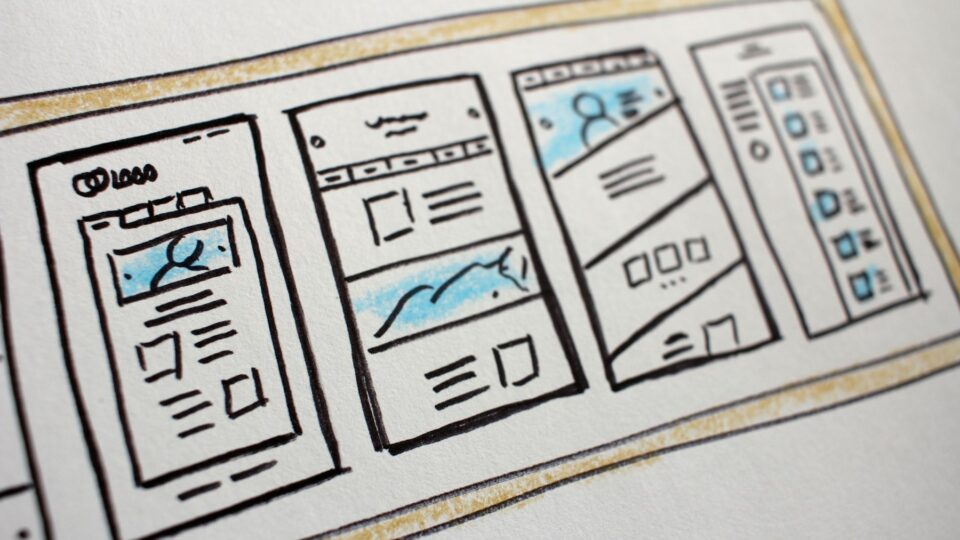
Photo: Kaleidico via Unsplash
Development
Typical UK app costs, three fully worked budgets at real hourly rates, the running costs most quotes leave out, and when a web app…
· 8 min read
 Development
The checklist we run before any website, shop or app goes live, what each check catches, how long it takes and what testing adds…
· 8 min read
 Development
A slow WordPress site is almost always fixable. These are the 12 fixes we apply, in order, to take a typical business site from…
· 8 min read
A developer replies within one working day. Fixed price or hourly, your choice — and the code is yours.