 Local
Local
Web design in St Albans: how to choose an agency you can meet
A practical guide to choosing a St Albans web design agency: what to decide first, the questions to ask, typical local prices, red flags…
· 8 min read
Local
The ten things that help Hertfordshire businesses show up in Google's map results, a worked example for a Hemel Hempstead trade business, and a realistic monthly routine.

Local SEO for a Hertfordshire business comes down to a short list done properly: a complete Google Business Profile in the right category, consistent contact details everywhere, a steady flow of genuine reviews, real service pages and honest town pages, local business schema, a fast mobile site, and a few links from local organisations. Do those ten things well and keep them up every month, and you will usually outrank competitors who spend more but do less. None of it is a trick, and none of it happens in a week.
We are based in St Albans and do this work for local businesses here, so the examples are Hertfordshire ones. The same steps work for a service business in Bristol, Leeds or Belfast; only the town names change.
When someone searches “electrician Harpenden” or “physio near me”, Google usually shows a map with three businesses (the local pack) above the normal results. Google’s own guidance says local results are based mainly on three things: relevance (does your profile match the search), distance (how far you are from the searcher or the place named) and prominence (how well known and well reviewed you are, online and off).
Hertfordshire adds a few quirks. It is a county of many mid-sized towns close together: St Albans, Harpenden, Watford, Hemel Hempstead, Hatfield, Welwyn Garden City, Stevenage and Hertford are all within a short drive. Many residents commute to London, so they search on their phones at odd hours and from different places. And a search from Bricket Wood can show businesses from three towns. Distance is something you cannot change, which is why the other two factors matter so much.
This is the single most important step, and most profiles we audit are only half done.
Do not stuff town names into your business name. It breaks Google’s guidelines and can get the profile suspended.
Your NAP (name, address, phone) should be identical on your website, Google, Bing Places, Apple Business Connect, Facebook, Yell, Thomson Local, trade directories and anywhere else you are listed. “17 Orient Close” on one site and “17 Orient Cl.” on another is fine; an old phone number or a previous address is not. If you have moved, from Hatfield to St Albans for example, search for the old address and fix every listing you find.
Reviews affect both rankings and whether people click. What matters is a steady stream of recent, genuine reviews, and replies from you.
Most small business sites have one “Services” page listing everything. Google, and customers, find it much easier to match a search to a page that is about one thing. Start with one page per main service: boiler servicing, bathroom fitting, emergency callouts. Each should explain what you do, prices or price ranges, areas covered, FAQs and photos of real jobs.
Then consider town pages, but only where you genuinely work there and have something specific to say. A page for Watford that mentions jobs you have done there, parking, typical properties and response times is useful. Twenty pages with identical text and a different town name swapped in are doorway pages, which Google treats as spam. Three good town pages beat thirty thin ones.
Each important page should have a title tag that says what it is and where, within about 60 characters: “Boiler Servicing in St Albans and Harpenden | Smith Heating”. Use the same plain language in the H1 and the first paragraph. Write for a person on a phone deciding whether to call you, not for a robot.
Structured data (schema.org markup) tells search engines exactly who you are, where you are and what you offer. For most local businesses we add LocalBusiness or a more specific type such as Plumber or Dentist, with name, address, phone, opening hours, geo-coordinates, service area and links to your profiles. Add FAQPage or Service markup where it fits. It takes a developer an hour or two and you can test it in Google’s Rich Results Test.
Most local searches happen on mobile, often on patchy signal on a Thameslink train or in a car park. If your page takes six seconds to load, they are back on the map pressing the next business. Aim for good Core Web Vitals, a tap-to-call phone number at the top, and a contact form that works with one thumb. We build to Lighthouse 95+ as standard; our guide to Core Web Vitals explains the targets.
Links from local, relevant websites are a strong prominence signal. Good sources in Hertfordshire include:
Avoid anyone selling “100 local citations for £20”. Most of those directories have no visitors and some do harm.
Post an update, offer or photo of a recent job to your Google Business Profile every week or two. Answer questions people ask on your profile. Add new photos monthly. Activity alone will not rank you, but an active profile converts better and gives Google fresh evidence that you are open for business.
Rankings for one keyword are a vanity metric. Track things that relate to money:
Check them monthly. Local SEO usually shows early movement within two to three months and builds over six to twelve.
A business with branches in, say, St Albans and Stevenage should have a separate Google Business Profile for each staffed location, each linking to its own location page on your website with that branch’s address, phone number, hours, team and reviews. Do not create profiles for places where you have no staffed premises; Google removes them, and repeat offenders can lose their other profiles too. A multi-location schema setup, with one LocalBusiness entry per branch, ties it together.
Here is how we would approach a typical one-van heating business serving Hemel Hempstead, Berkhamsted, Kings Langley and Watford, with an old five-page site and 14 Google reviews.
| When | What | Who / cost |
|---|---|---|
| Week 1 | Complete Google Business Profile: category, service area, services, 20 real photos | Owner, about 3 hours |
| Week 1–2 | Fix NAP on the 10–15 main directories | Owner or assistant, about 4 hours |
| Week 2–4 | New service pages (boiler servicing, installs, repairs, landlord safety checks), two town pages for Watford and Berkhamsted, schema, speed fixes | 10 h WordPress Development: £500 − 5 % = £475 + VAT (£570) |
| Ongoing | Ask every customer for a review by text; reply to all | Owner, 10 minutes a day |
| Monthly | Two profile posts, new photos, check Search Console and calls | Owner, about 1 hour |
| Month 3 | Review results, add a third town page if Watford work grows | Optional, a few hours |
Total outside spend: under £600 including VAT, plus the owner’s time. That is typical. Most local SEO is consistency, not budget.
We build fast, accessible WordPress sites with local schema, service and town pages, and clear calls to action, and we set up Google Business Profile properly at launch. For example, we built a WordPress site with online bookings and local SEO for Hypnotic Art. Our web development service covers the technical side. We do not sell monthly SEO retainers with vague reports; we prefer to do the technical work, show you the routine, and help when you need it.
You can book hours from £50/h for WordPress work, see our website packages, or read about web design in Hertfordshire. If you are choosing a local agency, our guide on how to choose a web design agency in St Albans may help.
Local SEO is the work that helps your business appear when people nearby search for what you offer, especially in Google's map results. It covers your Google Business Profile, reviews, consistent contact details, local pages on your website, schema markup and local links.
You will often see early movement in two to three months, particularly after completing your Google Business Profile. Stronger, more stable results usually build over six to twelve months of consistent reviews, content and profile activity.
No. Create town pages only where you genuinely work and have something specific to say. A few useful pages for your main towns work far better than dozens of copied pages, which Google can treat as spam.
No. Google's policies forbid incentivised reviews, and under the Digital Markets, Competition and Consumers Act 2024 fake reviews and concealed incentivised reviews are banned in the UK. Simply ask every happy customer, at the right moment, with a direct link.
Speed and mobile usability affect both rankings and whether visitors stay to call you. Most local searches happen on phones, so a slow site loses customers to the next business on the map.
Much of it is your own time: reviews, photos and profile updates. The technical work (service pages, town pages, schema, speed fixes) is typically 5–15 hours. At our WordPress rate of £50/h, 10 hours is £475 + VAT after the 5 % volume discount.
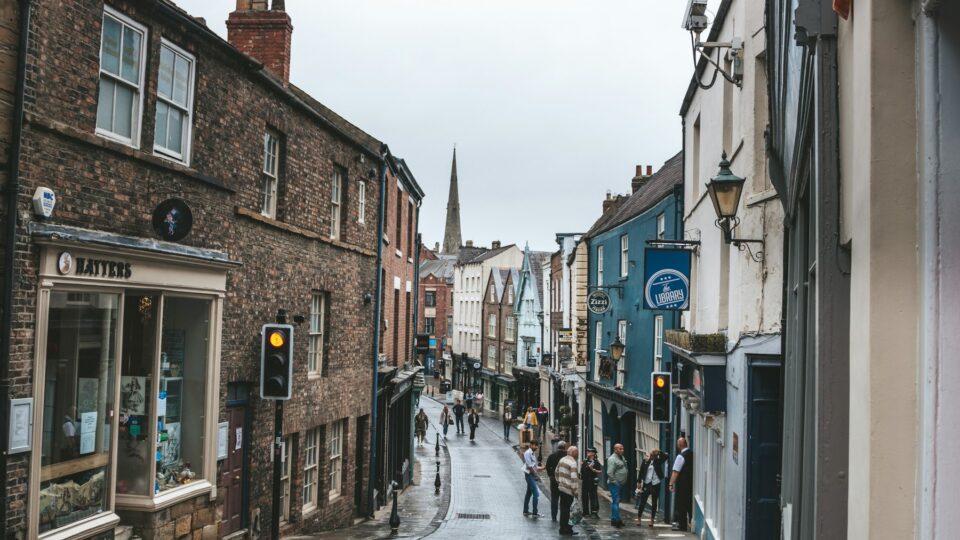
Photo: Ottr Dan via Unsplash
Local
A practical guide to choosing a St Albans web design agency: what to decide first, the questions to ask, typical local prices, red flags…
· 8 min read
A developer replies within one working day. Fixed price or hourly, your choice — and the code is yours.