 Guides
How to write a website brief (with a copy-and-paste template)
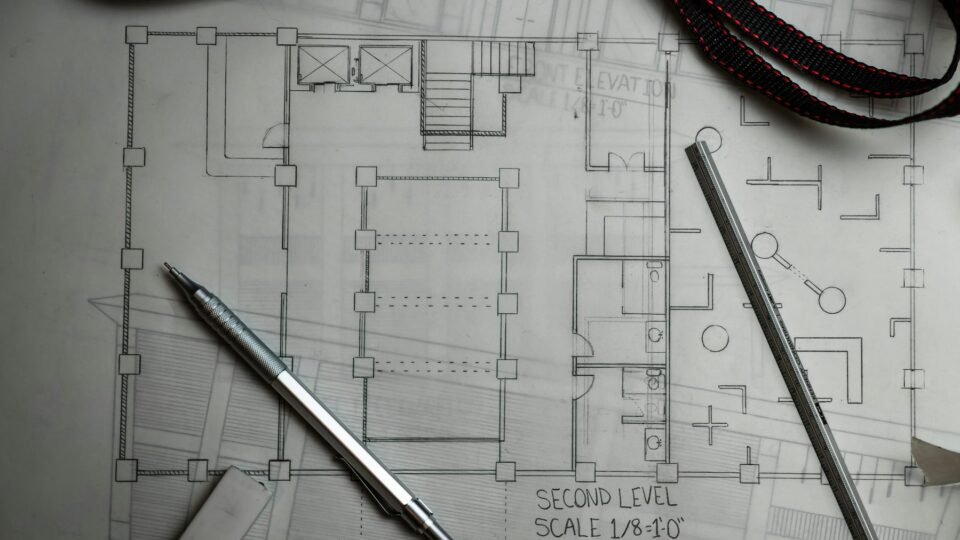
What to put in a website brief so agencies can quote accurately: thirteen short sections, a template to copy and paste, a filled-in example…
· 12 min read
Guides
Twelve questions that separate a good UK web agency from an expensive mistake, what a straight answer should sound like, and the red flags to walk away from.

To choose a web development agency, shortlist three that have built something close to what you need, then ask each the same questions: who owns the code and domain, what exactly the price includes, who does the work, how they handle hosting, speed, accessibility and security, and what happens after launch. Compare the answers in writing. The right agency gives specific, slightly boring answers. The wrong one gives you adjectives.
We sit on the other side of this conversation every week, so this guide is written from the agency side of the table. These are the questions we would want a client to ask us, and the ones we would ask if we were hiring someone else.
You will get far better quotes if you know these before the first call:
A one-page brief covering these, plus three sites you like and why, is enough. You do not need a 30-page specification for a business website.
Search is a fine starting point, but look at work, not rankings. Good sources of names are businesses in your sector whose websites you admire (ask them who built it), recommendations from your accountant or trade body, and agency portfolios with live links you can click and test.
Where the agency is based matters less than it did. Most UK web projects now run over video calls and shared documents, whether you are in Bristol, Belfast or Birmingham. What does matter is that there is a real company behind the website: check Companies House for the registered name and filing history, look for a landline that gets answered and a physical address. We are in London, and most of our clients are elsewhere in the UK; we meet in person when it is useful, not by default.
Three to four agencies is the right number. Fewer and you have nothing to compare; more and you will not read the proposals properly.
The only acceptable answer is “you do”. The domain should be registered in your business’s name, with you as the registrant. You should have admin access to the site, the hosting and any third-party accounts (analytics, Search Console, payment provider). If an agency registers the domain to themselves “for convenience”, you are a hostage the day you want to leave.
Ask for a line-by-line list: number of pages or templates, design rounds, content entry, stock images, forms, integrations, SEO basics, training, launch support. Then ask what is not included. This is where most disputes come from. Fixed-price packages are useful here because the scope is written down in advance; ours are on the packages page.
Every project changes. A good agency will tell you their hourly rate and how they record extra time. For reference, our rates range from £45 an hour for website design to £70 for mobile development, with volume discounts on blocks of hours that never expire. If an agency cannot tell you what a change will cost before doing it, expect surprises on the invoice.
Many agencies sell with senior people and deliver with juniors or offshore subcontractors. That is not automatically bad, but you should know. Ask who designs, who develops and who your day-to-day contact is, and whether any part is outsourced.
Not mock-ups. Live sites you can load on your phone. Check them on mobile data rather than office Wi-Fi. If a portfolio is all screenshots, ask why.
You are looking for reasons tied to your needs, not “we always use X”. Be cautious of proprietary systems that only that agency can maintain. WordPress, WooCommerce, Laravel and similar open-source platforms mean another developer can take over if needed. Our guide to web development frameworks explains the main options in plain English.
Ask for a target and a test. Google’s Core Web Vitals and a Lighthouse score are reasonable yardsticks. We aim for Lighthouse 100 on every template and show the report at launch. An agency that uses heavy page builders and stacks of plugins will struggle to promise this.
Under the Equality Act 2010, UK service providers must make reasonable adjustments for disabled people, and that is widely understood to include websites. WCAG 2.2 AA is the standard to work towards. A good answer mentions colour contrast, keyboard navigation, alt text, form labels and testing with a screen reader. A shrug is a bad answer.
Who installs updates, how often, and what happens if an update breaks something? Where are backups stored and how quickly can the site be restored? Is the site behind a firewall or CDN such as Cloudflare? If it handles payments, how is that kept out of scope for PCI compliance (usually by using Stripe or similar hosted payments)?
At a minimum: clean URLs, page titles and meta descriptions, an XML sitemap, structured data where useful, and 301 redirects from every old URL if you are replacing an existing site. Missing redirects are the most common cause of traffic falling off a cliff after a relaunch. Be wary of anyone guaranteeing rankings.
Get the monthly price and what it covers in writing: hosting, updates, backups, monitoring, a number of hours for small changes. Our guide to WordPress maintenance plans sets out what a fair plan should include.
Ask how you would get a full copy of the site and database, how long a handover takes, and whether there is any fee. The answer tells you a lot about how the agency treats clients.
| Topic | Good answer | Red flag |
|---|---|---|
| Domain ownership | “Registered to your company; we’ll set it up with you.” | “We look after that for you.” |
| Price | Itemised scope with exclusions listed | One figure, “everything included” |
| Changes | Hourly rate stated, approval before work | “We’ll sort it out at the end” |
| Platform | Reasoned choice, open-source | Proprietary system only they can edit |
| Speed | Target score plus report at launch | “It’ll be fast” |
| Accessibility | WCAG 2.2 AA with named checks | “Our themes are accessible” |
| Leaving | Full export, no exit fee | Vague, or a release fee |
Quotes for the same brief in the UK can differ by a factor of five or more. That is not always padding. A £600 quote and a £6,000 quote usually describe different things, so put them side by side in a simple table: pages, design approach (template or bespoke), content entry, integrations, training, support period, payment terms.
To give you a sense of scale with our own prices (all excluding VAT): a five-page Startup Website is £430, a ten-page Pro Website with CMS and a project manager is £750, an Elite Website with bookings and payments is £999, and a full Business / E-commerce build is £2,650. If you prefer to buy time, 20 hours of WordPress development is £1,000 less 15%, which is £850, or £1,020 with VAT.
Payment terms matter too. A 50% deposit with the balance at launch is common and fair. Paying 100% up front to an agency you have never worked with is a risk; paying nothing up front usually means the agency is taking one.
When the proposals arrive, score each agency from 1 to 5 on: understanding of your business, relevance of past work, clarity of scope and price, technical approach (speed, accessibility, security), support after launch, and how easy they were to deal with. The last one is underrated. You will be talking to this team for months. If replies were slow and woolly before you signed, they will not improve after.
The interview runs both ways. Pay attention to what each agency wants to know, because it shows whether they are thinking about your business or just your budget. On a first call we would expect a decent agency to ask:
If an agency jumps straight to colours and page counts without asking anything like this, the proposal will be generic. If they push back on part of your brief and explain why (“you don’t need an app for this, a fast mobile site will do it for a third of the cost”), that is usually a good sign. You want someone who will tell you when an idea is expensive and unnecessary, because that same person will tell you when something has gone wrong mid-project.
The cheapest quote is rarely the cheapest project, and the most expensive is not automatically the best. Pick the agency that asked you the most useful questions, gave you the clearest written scope and showed you live work like yours. Then agree the contract terms on ownership and exit before you agree the design.
If you would like us to be one of the agencies on your list, our web development service explains how we run projects, you can see work for organisations such as WWF, UNICEF and ActionAid on our clients page, and contact us with your brief for a written proposal.
Three or four is usually right. That gives you enough to compare scope and price without drowning in proposals. Send each the same short brief so the quotes are comparable.
It ranges widely. Template-based sites from small agencies can start at a few hundred pounds, while bespoke builds with integrations run into thousands. Our fixed-price packages start at £430 + VAT for a five-page site and £750 + VAT for ten pages with a CMS.
Location matters less than it used to, since most projects run well over video calls. What matters is that the agency is a real, registered UK business you can reach by phone, and that you can meet in person if you want to. Check Companies House and ask for live examples of their work.
Your business. The domain should be registered in your company name with you as the registrant, and you should have login access to the registrar. An agency can manage it for you, but ownership should never sit with them.
The scope (pages, features, design rounds), price and payment terms, timeline, how changes are charged, ownership of code, content and domain, hosting and support terms, and what happens if either side ends the agreement.
Yes. Nobody controls Google’s results, and Google itself warns against companies that guarantee rankings. A good agency will promise a technically sound, fast, well-structured site and explain how it supports your SEO, not a position.
Photo: Headway via Unsplash
Guides
What to put in a website brief so agencies can quote accurately: thirteen short sections, a template to copy and paste, a filled-in example…
· 12 min read
 Local
A practical guide to choosing a St Albans web design agency: what to decide first, the questions to ask, typical local prices, red flags…
· 8 min read
 Guides
A small business website in the UK typically costs £500–£5,000 to build, and an online shop more. Our real package prices, hourly rates, four…
· 12 min read
Also useful: Freelance developer vs agency in the UK: costs, risks and when each makes sense · IT consulting · Case study: E&S Solicitors
Ready when you are
A developer replies within one working day. Fixed price or hourly, your choice — and the code is yours.