 E-commerce
PrestaShop in the UK: pros, cons and when to migrate to WooCommerce
PrestaShop is capable and free, but its UK ecosystem is thin. When to stay, when to upgrade, and how a WooCommerce migration works and…
· 9 min read
E-commerce
Magento is powerful and expensive to run well. What UK retailers really pay for build, hosting and upkeep over three years, and how to tell if your shop needs it.
Magento is worth it for a UK retailer when the shop is genuinely complex: tens of thousands of SKUs, several storefronts or currencies from one stock pool, trade customers with their own price lists, or an ERP that has to stay in step with the website every few minutes. If none of that describes you, Magento will cost you more to build, host and keep patched than WooCommerce or Shopify, and you will not feel the benefit. As a rough guide, a well-built Magento Open Source shop from a UK agency starts in the low five figures, needs specialist hosting from around £100 a month, and needs regular developer time for security patches.
That is the short answer. The rest of this guide explains the two editions, what a build really involves, what it costs to run for three years, and how to tell whether your business has outgrown simpler platforms. We build on Magento, WooCommerce and PrestaShop, so we have no reason to push you towards the most expensive option.
Adobe bought Magento in 2018. Today there are three things people mean when they say “Magento”.
Magento Open Source is the free edition. You download it, host it wherever you like and pay developers to build and maintain it. It already includes the serious retail features: configurable products, multiple websites and store views from one admin, customer groups, tiered pricing, cart price rules, layered navigation and a mature REST and GraphQL API. Most small and mid-sized Magento shops in the UK run this edition.
Adobe Commerce is the licensed edition, sold on-premise, on Adobe’s managed cloud, or as a newer SaaS-style service. It adds a full B2B suite (company accounts with buyers and approvers, shared catalogues, quote requests, purchase orders and credit limits), content staging and scheduling, customer segments and Adobe’s support. Adobe does not publish list prices. Licences are quoted individually and generally scale with your gross merchandise value; figures reported by UK merchants and agencies usually start in the tens of thousands of pounds a year. For a business turning over a few hundred thousand pounds online, that alone rules it out.
Mage-OS is a community-led distribution of Magento Open Source, maintained by developers and agencies who wanted a release cycle not tied entirely to Adobe. It stays compatible with Open Source extensions. It is a sensible choice for some projects, though for most UK shops plain Open Source remains the default.
We recommend Magento when a business ticks at least two or three of these boxes. One on its own is rarely enough.
Picture a trade supplier in Leeds with 15,000 SKUs, separate trade and retail price lists, and stock held in an ERP. Magento’s customer groups, shared stock and API make that tidy. Doing the same in WooCommerce is possible, but it means stitching together several plugins, and the database starts to strain once order volumes climb.
We usually steer people away from Magento if:
In those cases WooCommerce is usually the better fit, and we explain why in our WooCommerce vs Magento vs PrestaShop comparison. If you want Shopify’s convenience, that is a valid choice too, with the trade-off that you rent the platform rather than own it.
Agency quotes for Magento vary widely, and you will see anything from £10,000 to well over £100,000. The spread comes from three things: how much custom design you need, how many integrations there are, and how much data has to be migrated and cleaned.
Here is how we would price a typical mid-sized project on our hourly model. Our e-commerce development rate is £65 an hour, and blocks of 100 hours or more carry a 25 % discount, which brings it to £48.75 an hour. Prices exclude VAT at 20 %.
| Project | Typical hours | Cost after discount | With VAT |
|---|---|---|---|
| Magento Open Source with a Hyvä theme, one store, up to 5,000 SKUs, card payments, standard shipping | 220–300 | £10,725–£14,625 | £12,870–£17,550 |
| As above, plus trade price lists and one ERP integration | 300–420 | £14,625–£20,475 | £17,550–£24,570 |
| Two storefronts (UK and EU), multi-currency, ERP and PIM feeds, data migration from an old platform | 450–650 | £21,938–£31,688 | £26,325–£38,025 |
Those are estimates for scoping, not a fixed quote. The biggest cost swing is usually the integration with your back-office system, because the quality of its API and data is outside our control. A clean, documented API saves weeks; an old desktop accounting package that only exports CSV adds them.
The default Magento front end (Luma) is heavy, and it is hard to get a Luma store to pass Core Web Vitals on a mid-range phone. Hyvä is an alternative theme built on Alpine.js and Tailwind CSS that strips out most of that weight. It became free and open source in late 2024, which removed the licence fee that used to put smaller shops off. On a new build we use Hyvä by default and aim for the same Lighthouse 95+ target we set on every other site. Some older extensions need a Hyvä compatibility module, so we check the extension list before we commit.
Magento will not run well on cheap shared hosting. A production store needs PHP 8.x tuned for Magento, MySQL or MariaDB, OpenSearch for catalogue search, Redis for cache and sessions, Varnish for full-page caching, and ideally a CDN such as Cloudflare in front. You also want a staging server that mirrors production, so patches are tested before they go live.
| Hosting option | Rough monthly cost | Suits |
|---|---|---|
| Managed Magento hosting (UK data centre, small store) | £100–£250 | New stores, modest traffic |
| Managed hosting with dedicated resources | £300–£800 | Established stores, sales peaks |
| Cloud (AWS, Google Cloud) run by your agency | £250–£1,000+ | Multi-store, high traffic, custom scaling |
| Adobe Commerce Cloud | Bundled with licence | Adobe Commerce customers only |
These are typical market ranges in 2026, not quotes from any particular provider. The single most common performance problem we see on inherited Magento stores is not the code; it is a server without Varnish or Redis configured, or with OpenSearch starved of memory. Black Friday then exposes it.
The build is the visible cost. Running it is where budgets go wrong. Adobe releases security patches for Magento several times a year, and each supported 2.4.x release has a published end-of-support date on Adobe’s lifecycle policy page. In practice each release gets around three years of security fixes, so a store you launch today will need at least one significant upgrade within that period.
Here is a worked comparison for a hypothetical UK shop turning over £600k a year online, with 4,000 products and one ERP link. Figures exclude VAT.
| Cost over three years | Magento Open Source | WooCommerce |
|---|---|---|
| Build | £14,000 | £7,000 |
| Hosting | £6,300 (£175/month) | £1,800 (£50/month) |
| Paid extensions and renewals | £3,000 | £1,500 |
| Patching, upgrades and small changes (Magento about 10 hours a month, WooCommerce about 8, bought in 100-hour blocks at £48.75) | £17,550 | £14,040 |
| Total | £40,850 | £24,340 |
On those assumptions Magento costs about £16,500 more over three years. That gap is worth paying if Magento removes manual work: if your staff spend two days a week rekeying trade orders or reconciling stock between systems, automating that is worth far more than £16,500. If it does not remove work, you are paying for capacity you do not use.
Monthly support on our hourly model is straightforward. A block of 10 hours at our e-commerce rate is £650 less 5 %, so £617.50, or £741 with VAT, and unused hours never expire. You can book hours online and use them for patches, upgrades and changes as needed.
Magento handles UK VAT properly once configured: tax classes for standard, reduced and zero-rated goods, prices entered including or excluding VAT, and VAT shown correctly on invoices. A few UK points we always check:
Many UK businesses come to us with a Magento store that was built some years ago and has drifted: an old 2.4 release, a Luma theme with a dozen overrides, and extensions that nobody has updated. The choice is between an upgrade and a replatform.
Upgrade if the catalogue and business rules still need Magento, and the custom code is reasonable. A typical upgrade from an older 2.4 release to the current one, with a Hyvä front end, is a fraction of the cost of a new build.
Replatform to WooCommerce if the store is mostly simple retail and the Magento complexity is costing you more than it gives back. We have a separate guide to WooCommerce development for UK shops that covers what that build involves. Either way, the order history, customer accounts and every old URL need to come across, with 301 redirects so you keep your search rankings.
When we take over a store, this is what we look at in the first week:
If your business has a large catalogue, several storefronts, trade pricing or a demanding ERP link, Magento Open Source on good hosting with a Hyvä front end is a strong, long-lived platform, and we are happy to scope it. If you are a growing retailer with a few hundred or a couple of thousand products, WooCommerce will do the job for considerably less, and you can revisit Magento if you outgrow it. For businesses whose requirements fit neither, a bespoke e-commerce build is the third option.
We are based in St Albans and work with retailers across the UK, remotely or in person in London. If you want a straight answer on whether Magento suits your shop, get in touch with your product count, turnover band and the systems you need to connect, and we will tell you what we would do. Integrations are a large part of most Magento projects; our API development and integration team handles ERP, PIM and warehouse links.
For a Magento Open Source store built by a UK agency, expect from roughly £10,000 to £15,000 for a single-store build with a modern Hyvä front end, rising to £25,000 to £40,000 or more with ERP integrations, multiple storefronts and data migration. Hosting adds around £100 to £800 a month, and you should budget for monthly maintenance on top.
Magento Open Source is free to download and use. You still pay for hosting, development, paid extensions and ongoing patching. Adobe Commerce, the enterprise edition, needs a paid licence that Adobe quotes individually, usually linked to your gross merchandise value.
For large catalogues, multiple storefronts and complex B2B pricing, Magento is the stronger platform. For most UK shops with a few thousand products or fewer, WooCommerce is cheaper to build and run, easier for staff to use and better for content. The right answer depends on your catalogue and integrations rather than on turnover alone.
Not well. A production Magento store needs OpenSearch, Redis, Varnish and properly tuned PHP and MySQL. Cheap shared hosting rarely provides these, and the result is a slow admin, slow pages and problems at sales peaks. Use managed Magento hosting or a cloud server configured for Magento.
Adobe releases security patches several times a year, and each 2.4.x release has a published end-of-support date. Plan to apply security patches within weeks of release and to carry out a larger version upgrade roughly every two to three years. Most stores need a few hours of developer time each month.
If your store is mostly straightforward retail and Magento's running costs outweigh what it does for you, a move to WooCommerce often pays for itself within a couple of years. If you rely on multi-store, trade pricing or heavy integrations, upgrading Magento is usually the better path. Either way, migrate orders, customers and every URL with 301 redirects.
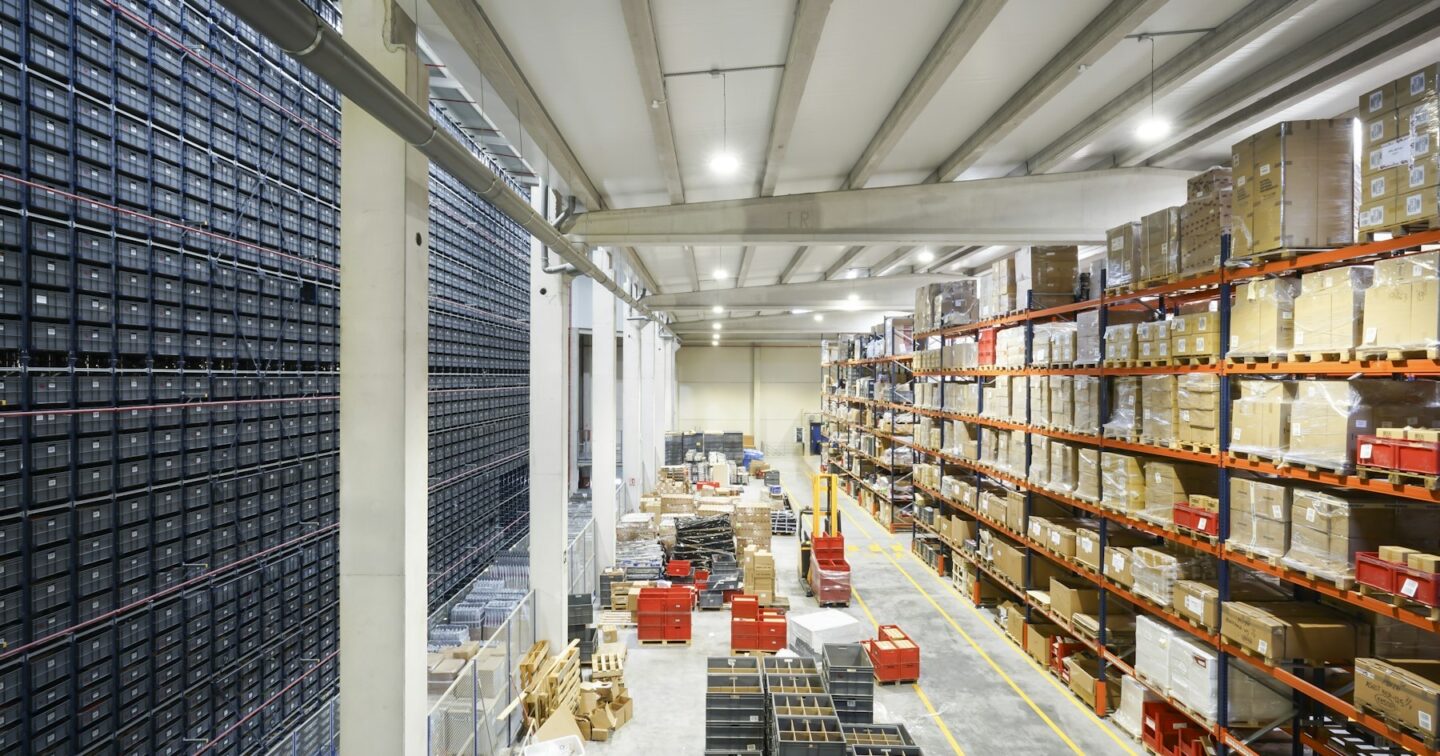
Photo: Alberto Rodríguez via Unsplash
E-commerce
PrestaShop is capable and free, but its UK ecosystem is thin. When to stay, when to upgrade, and how a WooCommerce migration works and…
· 9 min read
 E-commerce
Under about £250k a year online, Shopify and WooCommerce cost almost the same over three years. Here's the worked maths, and how to choose.
· 9 min read
 E-commerce
Stripe is the best default for UK card payments, PayPal adds buyer trust, and Direct Debit is cheapest for recurring payments. Current fees, worked…
· 7 min read
A developer replies within one working day. Fixed price or hourly, your choice — and the code is yours.